
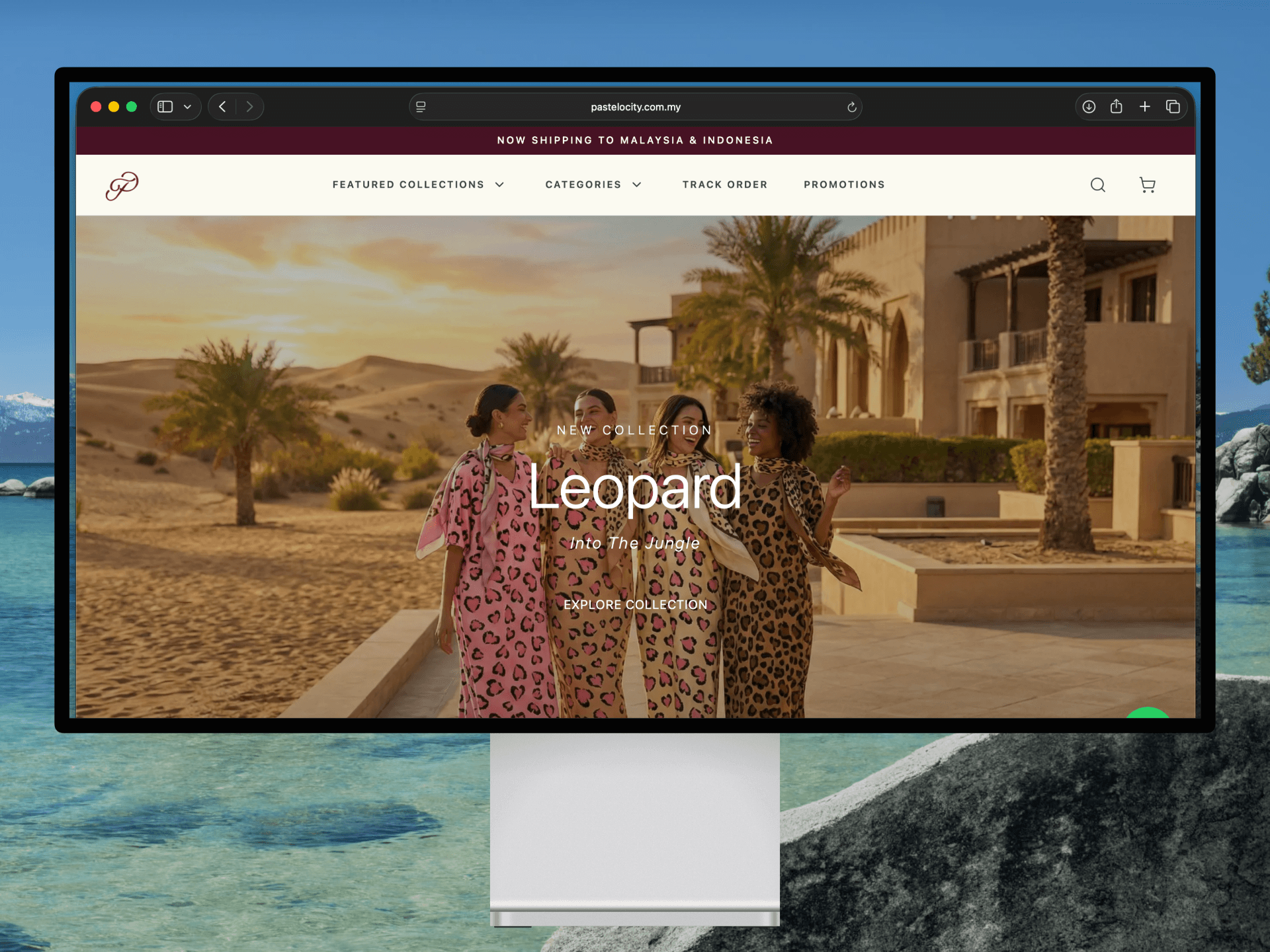
The problem was not a missing website
Pastelocity’s products, customers, orders, payments, receipts and files had grown across separate manual processes. Each task could be completed, but reconstructing the context around an order made the business harder to operate.
The project began with the workflow rather than a list of pages. Relationships between customers, products, commercial values, payment state, receipts and the next operational action became explicit before they became interfaces.
The order became the operating model
Treating an order as the centre of the system connected information that previously lived apart. The administrative interface mattered as much as the storefront because it was where the owner reviewed work, changed state, produced documents and decided what needed attention.
Django REST and later FastAPI services supported the application layer. React and TypeScript powered the interface. Authentication, notifications, task management, file storage and reporting formed the surrounding workflow.
The outcome was consolidation
Pastelocity created one application foundation for previously separate business processes. The value was not simply that records moved into a database. The system preserved the relationships the business already depended on and gave each part of the workflow a shared operating context.
The project reinforced a useful principle: good business software makes the workflow clearer, not merely digital.