



Execution & authority
The model proposes typed operations over an editable-target catalog. Local code rejects invalid operations and validates the complete profile before rendering.
Inspect the execution boundary
Backend services, document processing, validation and failure handling for Monitorscape.
Read the Monitorscape case studySoftware engineer based in Malaysia, working with suitable clients internationally.
Explore my portfolioSystems & AI infrastructure
Systems engineering. AI infrastructure.
Reliable software depends on execution, state, observability and recovery. Axelyn publishes the decisions behind its systems, with an increasing focus on infrastructure for AI workloads. Start with the working Forge architecture, then inspect the areas under investigation.
Implemented engineering / Axelyn Forge
Forge is a working private document workflow using external model APIs. Its published architecture explains how application code controls evidence, model authority, artifacts and deployment. The private interface serializes work; its operational limits are part of the document.
Canonical data, evidence and templates define what may change.
Profile isolation · Serialized private jobs · Usage ledger · Health-checked releases
The application validates model proposals and publishes complete artifact packages. The documented workflow runs as a private service, with serialized jobs and external model APIs.
The model proposes typed operations over an editable-target catalog. Local code rejects invalid operations and validates the complete profile before rendering.
Inspect the execution boundarySQLite indexes known evidence. Private profiles use separate state and output directories, while the Discord interface serializes tailoring work.
Inspect the state boundariesModel requests create usage-ledger entries before execution. Failed and interrupted requests remain visible; completed records can include duration, tokens and estimated cost.
Inspect the operational recordA constrained container runs a tested commit. Immutable releases are promoted after a health check, with the previous release restored if the replacement fails.
Inspect deployment and rollbackEngineering work
Each entry identifies the system's status separately from its published documentation. A proposal describes an approach to validate; it does not establish a working implementation.
Architecture note · v0.2.0
Working implementation
Working private system · Public blueprint
How Forge turns verified career evidence and a job description into a tailored resume and cover letter without giving the model control of candidate facts or document layout.
The production system and candidate data remain private. This page publishes the operating pattern, control boundaries and known constraints.
Read the architectureArchitecture note · v0.1.0
Research proposal
Proposed system · Public blueprint
A system for independent florists to keep the agreed bouquet design, payment, card message, delivery details and later changes together from the customer's first request to collection or delivery.
This is a proposed operating blueprint. It describes the first-version workflow, information boundaries and measures to validate before a full build.
Read the architectureArchitecture note · v0.1.0
Research proposal
Proposed system · Public blueprint
A planning system that connects bouquet recipes, current material costs, usable stock and confirmed orders so a florist can review pricing and prepare one consolidated purchase list.
This is a proposed operating blueprint. Its calculations depend on current supplier costs, consistent unit conversions and practical usage estimates maintained by the florist.
Read the architectureAreas of investigation
These areas guide ongoing learning and future experiments. Distributed scheduling, inference serving and performance evaluation require their own implementations and reproducible evidence before results can be claimed.
Delivery evidence
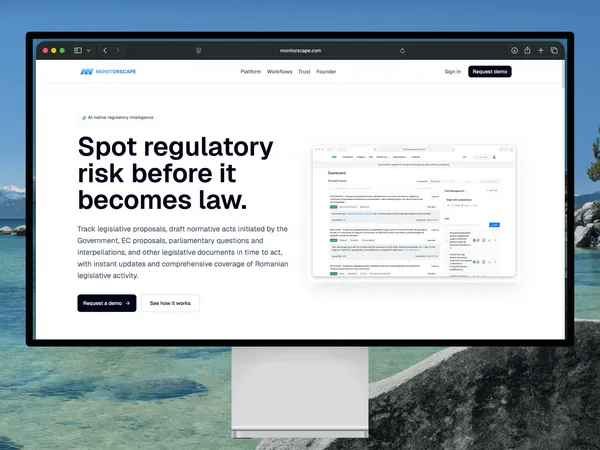
Monitorscape documents multi-source ingestion, validation and backend failure handling. Pastelocity connects business records and operational handoffs. Memora brings together private event access, media handling and production infrastructure.
Read the implementation case studiesFuture experiments
Future work will use the same structure: the question, system status, design decisions, evidence and known limitations. Further reports, benchmarks and open-source releases will appear here when there is work to inspect.