
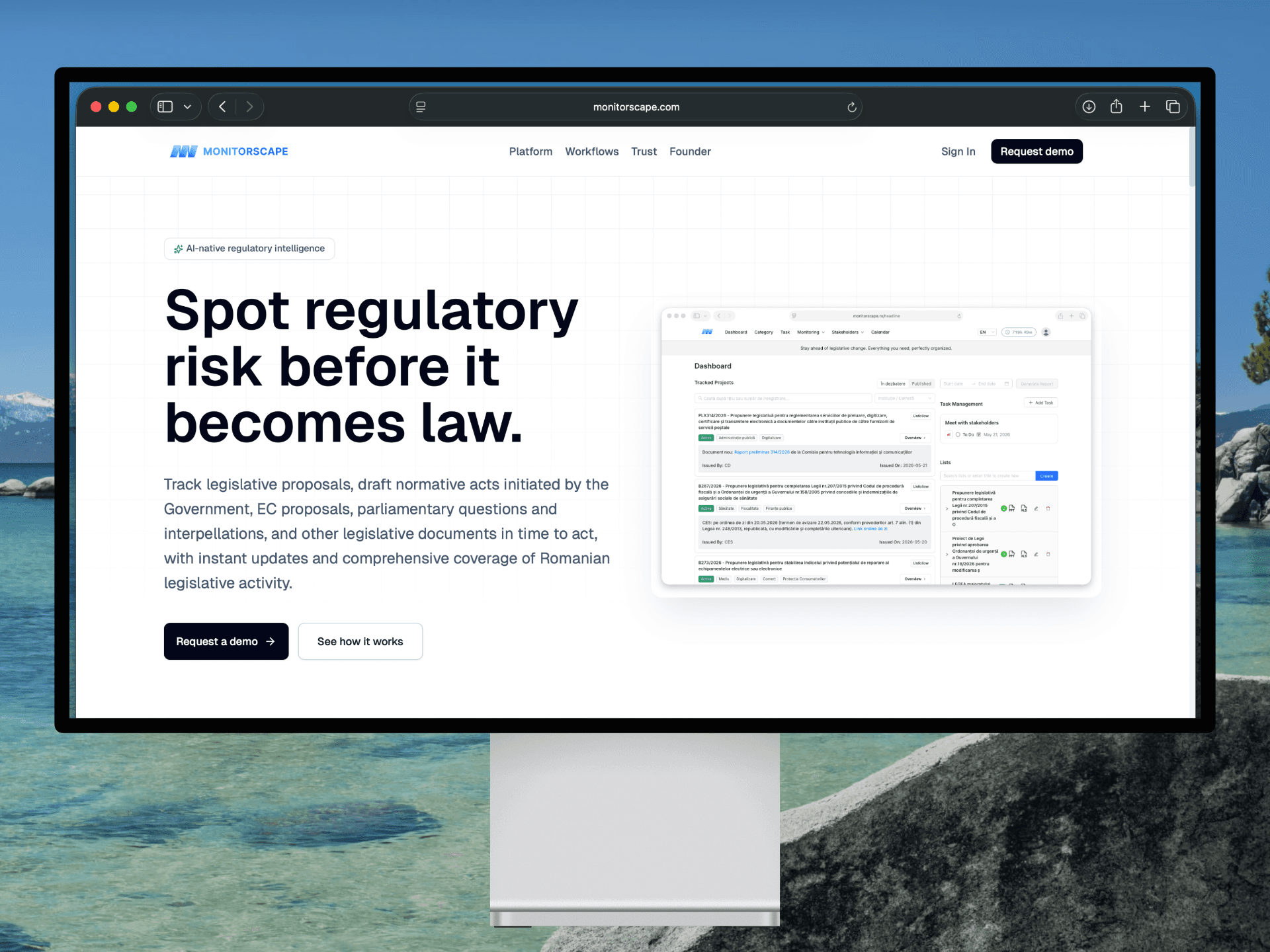
The problem was dependability
Regulatory updates arrive through government portals, feeds, public APIs, PDFs and dynamic websites. Every source has its own structure and failure modes. Collecting that information is only useful if a team can trust what reaches the product.
The work turned source-specific acquisition into a shared downstream pipeline: extraction, validation, transformation, categorisation, summarisation and durable storage. A failure at one stage could be surfaced instead of quietly becoming bad data at the end.
AI sits downstream of evidence
Models help classify and summarise a growing volume of material. They do not replace the original source. Structured metadata and traceable evidence remain the foundation, giving analysts a route back to the publication behind every derived field.
Axelyn’s role covered backend services, APIs, data models, ingestion, document processing, failure handling and deployment concerns. The outcome was an operational capability: a repeatable path from many external sources to reviewable regulatory intelligence.
What carried forward
External integrations are living dependencies. They change, fail and need observation. Monitorscape established a principle used across later work: before asking what a model can generate, define where the information comes from, how it is validated and what happens when a dependency fails.