
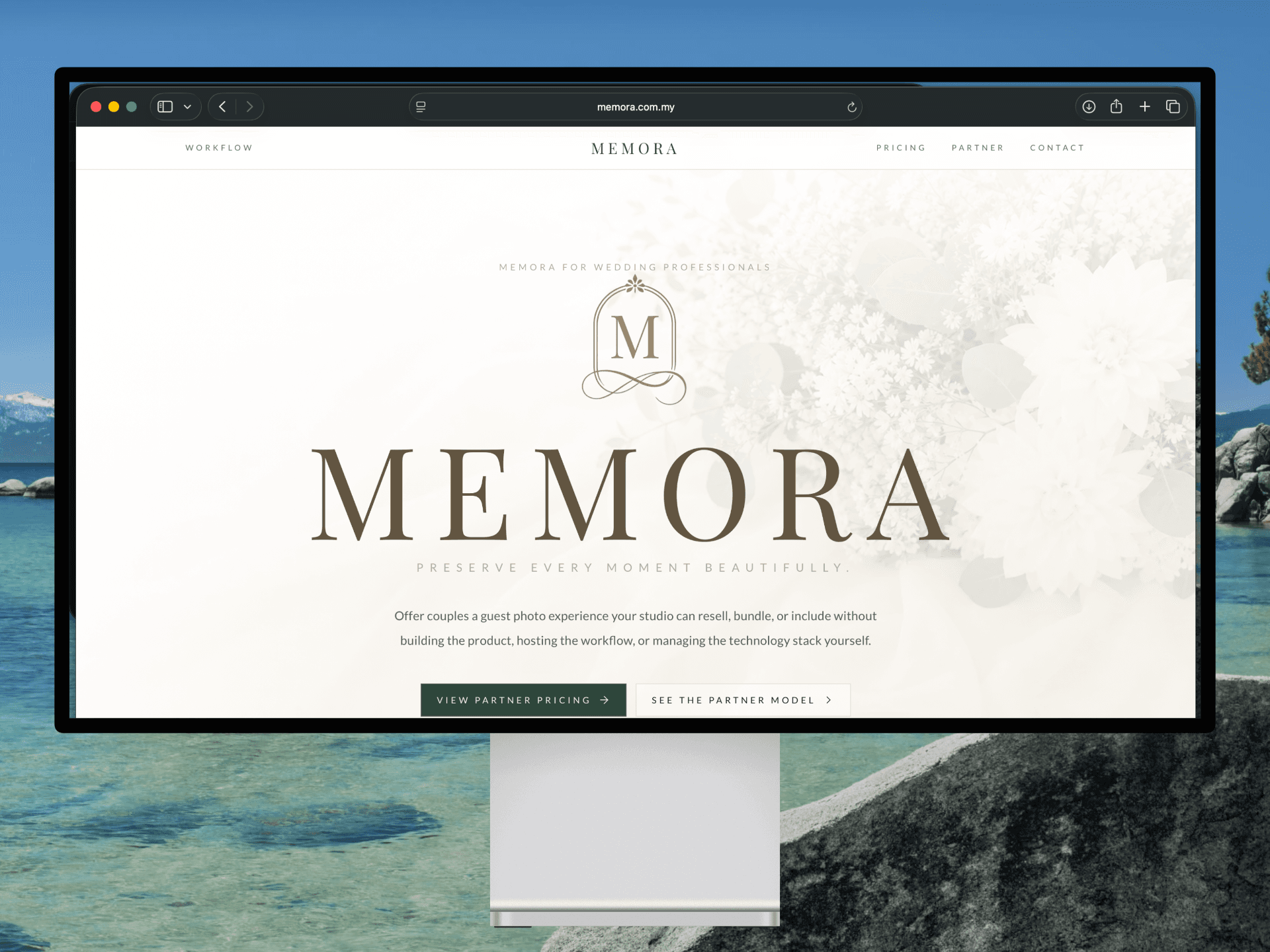
The problem was getting the memories back
A wedding already produces hundreds of small moments, but they stay spread across phones, messages and private galleries. Asking everyone to send their photos later becomes another task, and many contributions disappear.
Memora narrows the problem to one simple flow: scan a QR code, enter a name, share photos or wishes, and save them to the private event. Guests do not create accounts. The system still has to enforce event access, ownership, upload rules and valid operations behind the interface.
Complexity moves away from the guest
React and TypeScript power the guest experience. Python services, PostgreSQL, authenticated APIs and cloud storage manage the durable workflow. Google Drive export connects a temporary live event to the couple’s long-term archive.
Real event use exposed the details a portfolio prototype cannot: mobile upload behaviour, instructions, production data and operational support. The product continued to evolve around those observations.
From a gallery to a story
Collecting files answers what everyone contributed. It does not fully capture what the event felt like. That insight led to a curated, scrollable story that can combine selected photos and messages into chapters—moving the product from storage toward memory design.